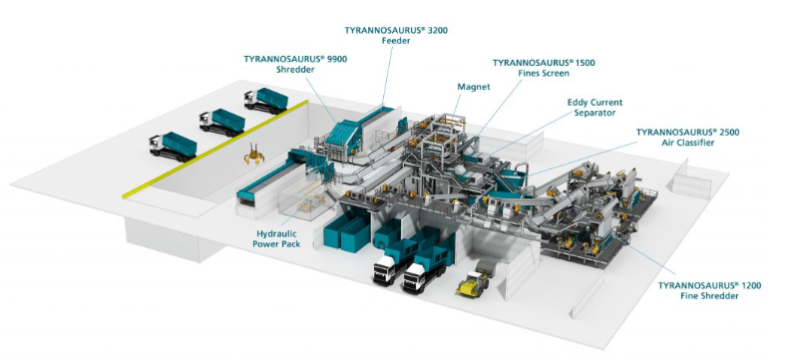

This dual-line processing plant can handle up to 80 tons of dry ICW or MSW per hour, contingent upon the initial quality of the input materials. The resultant product is high-calibre SRF/RDF, boasting a yield ranging from 60% to 95%. The actual yield is contingent upon the settings of the separation equipment and the specifications required for the fuel’s characteristics.
With an operational schedule of approximately 4,000 hours per annum, the total processed input quantity would approximate 320,000 tons annually. Assuming a yield of 75% and a thermal value of 15 MJ/kg for SRF, the thermal energy output would be adequate to sustain a modern Circulating Fluidized Bed (CFB) boiler of approximately 130 MWth capacity throughout the year, provided the boiler operates for 7,800 hours annually. This output could be converted into electricity generation ranging from approximately 40 to 50 Megawatts electrical (MWe) or more. Annually, this production level would equate to approximately 390,000 Megawatt-hours (MWh). It’s important to note that these figures are subject to variation based on several factors including operational hours, characteristics of the ICW, requirements and yield of SRF/RDF, as well as the type and capacity of available boilers, among other considerations.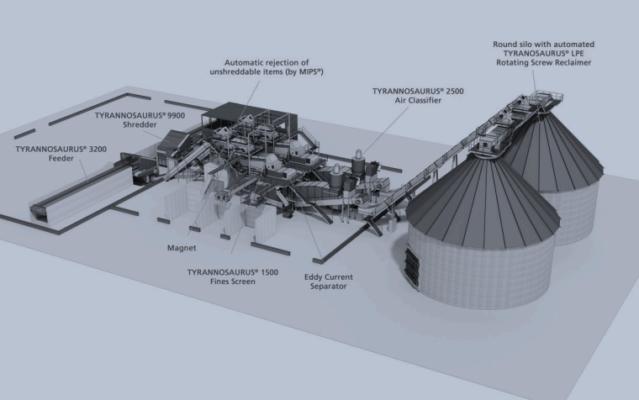
The process described here focuses on refining Municipal Solid Waste (MSW) with a high organic content into Solid Recovered Fuel (SRF) or Refuse Derived Fuel (RDF), aiming to optimize both the quantity and quality of the SRF/RDF while minimizing the amount of rejects destined for landfill. The input material comprises a mix of organics and inert components like stones and soil.
Operating at a capacity of approximately 70–80 tons of MSW per hour, depending on its quality, the plant generates SRF/RDF and recovers recyclable materials. In certain scenarios, the separated inert materials can serve as raw material for cement production.
With an anticipated 4,000 annual operating hours, the plant’s capacity reaches around 300,000 tons per year. Assuming an SRF yield of 70%, the annual production of SRF would total approximately 210,000 tons, leaving around 90,000 tons of high-quality inert alternative raw materials.
This annual SRF output could effectively supply a cement plant producing approximately 6,000 tons of clinker per day, operating at a fuel substitution rate of approximately 30-40%. It’s important to acknowledge that these figures are subject to variation based on factors such as operational hours, characteristics of the MSW, requirements and yield of SRF/RDF, among other variables.